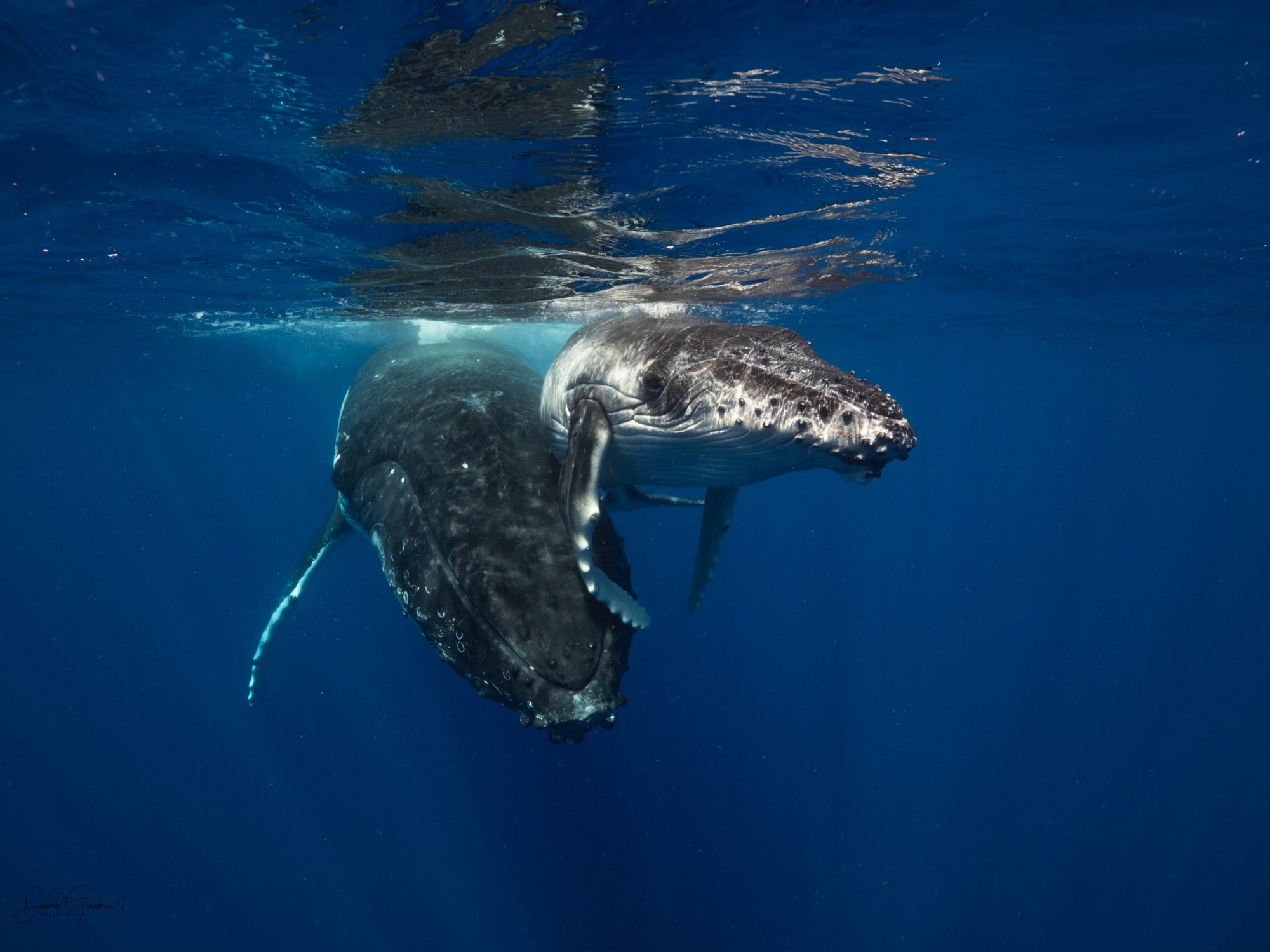
I was fourteen years old when a Discovery Channel documentary changed my life. A guy swimming with humpback whales in different places around the world, and then the episode about Tonga. I watched it and something locked into place. I had a map on my wall in my room, and that night I put a mark on it: Tonga. Not a vague someday. A specific place I had decided I would reach. It took twenty-five years. In 2019, I finally made it to Vava'u, not as a tourist, but as a dive instructor and whale swim guide. I lived there for a season. I was in the water with humpbacks almost every day. The map on the wall turned out to be right.
Vava'u is an archipelago in the north of Tonga, a scatter of volcanic islands creating sheltered bays and channels of extraordinary calm. The water is the colour of blue glass. Clear, deep, absolute. Every August, humpback whales arrive from their Antarctic feeding grounds to breed and give birth here, in the warmth.
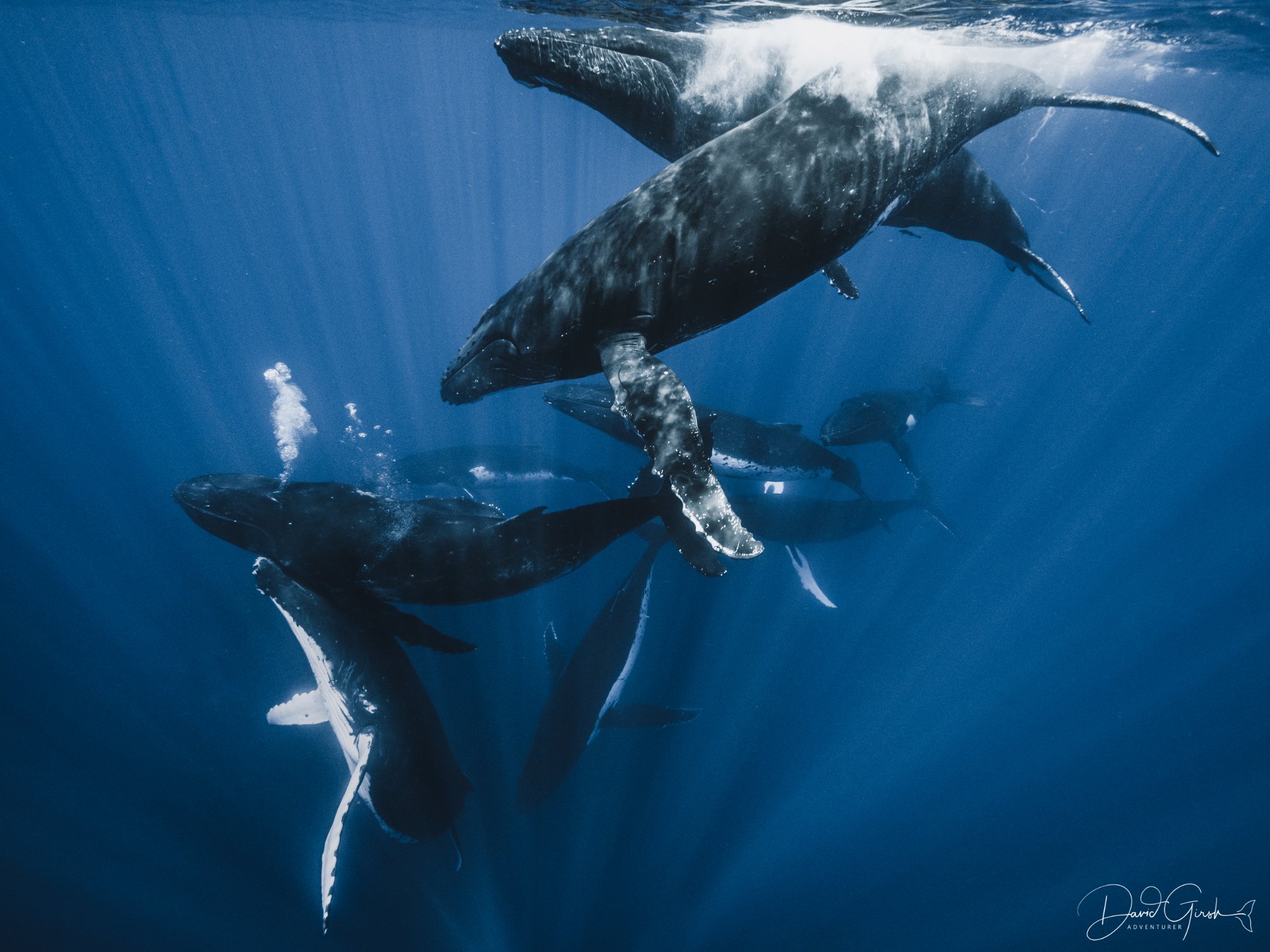
Working as a whale swim guide is not what most people imagine. The experience side, the magic, the encounters, the moments that stay with you, is real. But it sits inside a framework of responsibility that shapes every decision you make in the water. You're reading the whale's body language constantly. You're managing a group of guests who are overwhelmed and excited and sometimes forget the briefing the moment they hit the water. You're making calls, get in, stay back, everyone out, in seconds, based on what the animal is telling you. When it works, it's the best job in the world. When it doesn't, you've disturbed an animal that trusted you enough to let you close.
THE SINGING, NOTHING PREPARES YOU
People talk about whale song in the abstract, the complexity, the evolution, the fact that male humpbacks compose songs that spread across ocean basins as other males learn and modify them. The science is remarkable. But nothing in the science prepared me for what it actually feels like to be in the water when a male is singing nearby.
It doesn't start as sound. It starts as vibration, a low, resonant pressure you feel in your chest before your ears register anything. Then the sound arrives: moaning, creaking, rising sequences that end in long, haunting falls. Humpback song is the longest and most complex vocalisation in the animal kingdom. It carries for hundreds of kilometres through the ocean. In Vava'u during peak season, you can hear males singing from the surface, face down in the water, without any equipment at all.
I was floating above thirty metres of blue, not moving, just listening. The song was coming from somewhere below and to the left, impossible to pinpoint, seeming to come from everywhere at once. I stayed there until I had to breathe. Then I surfaced, caught my breath, and went back down to listen again.
On days when we found a singer, a male hovering motionless in the water column, pectoral fins slightly extended, producing sound at a volume that was almost physical, the whole boat went quiet. Guests who had been chattering and excited fell silent. There's something about the scale and the strangeness of it that moves people in ways they don't expect. I watched grown adults cry in the water. I understood completely.
MOTHERS, CALVES AND CLOSE ENCOUNTERS
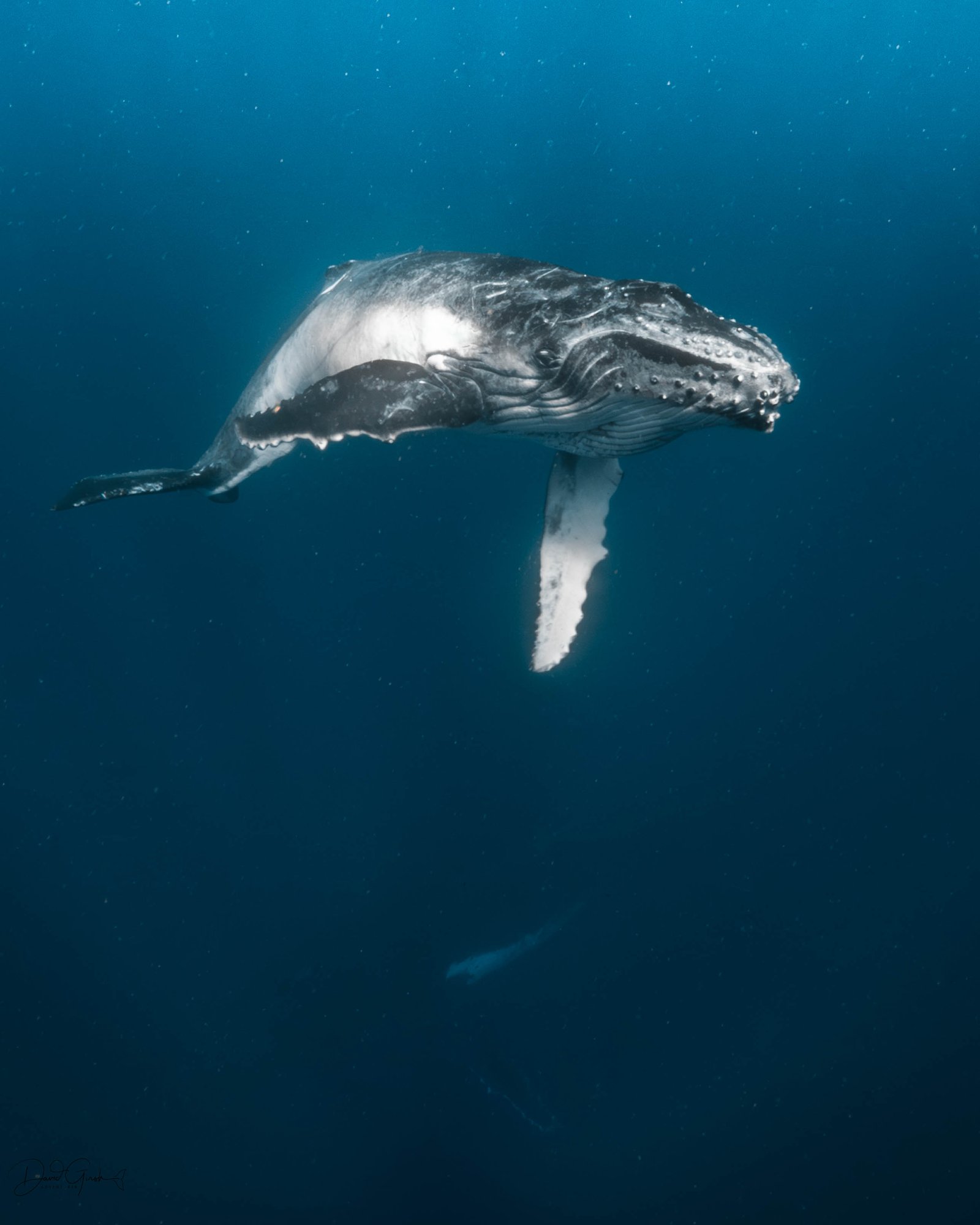
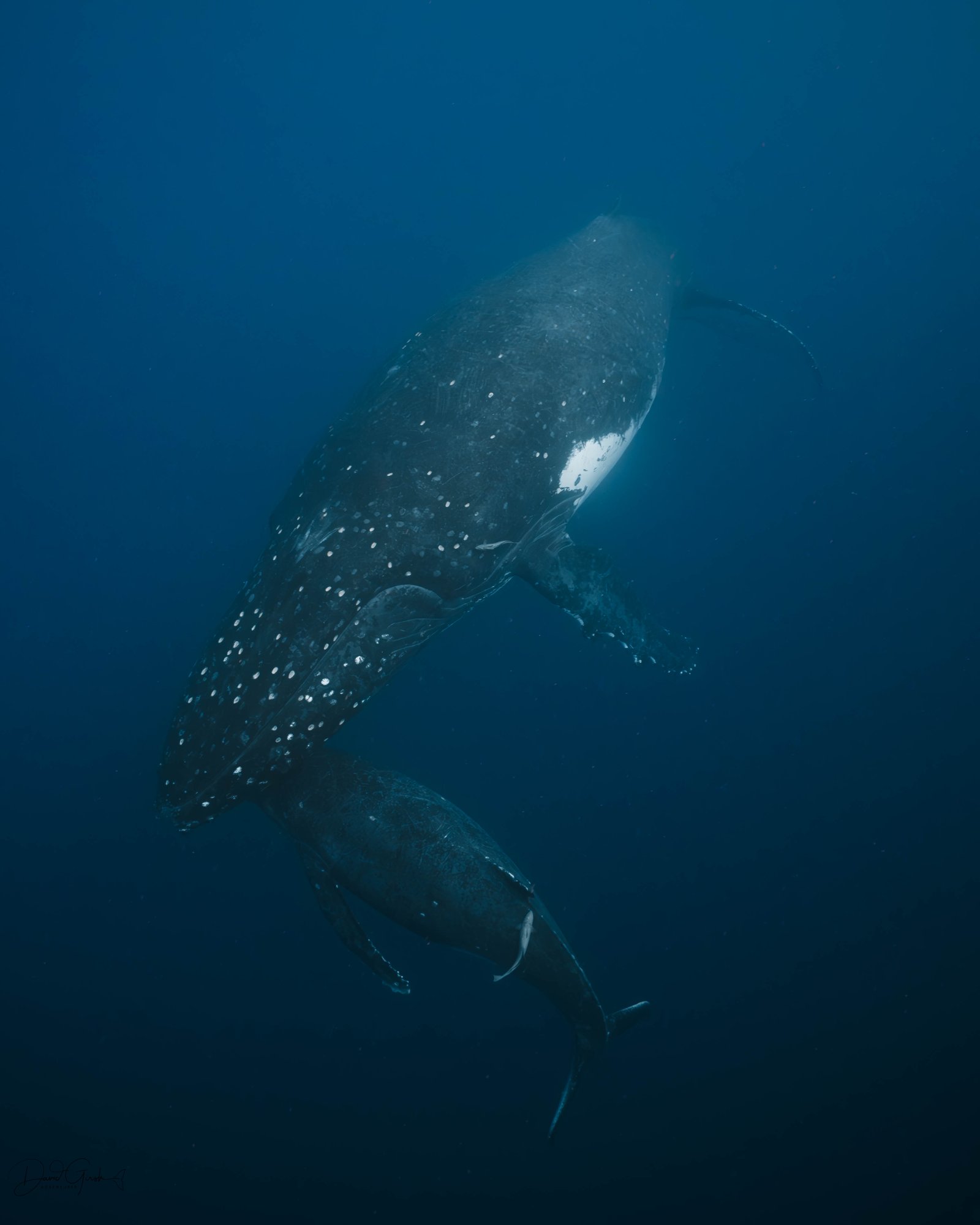
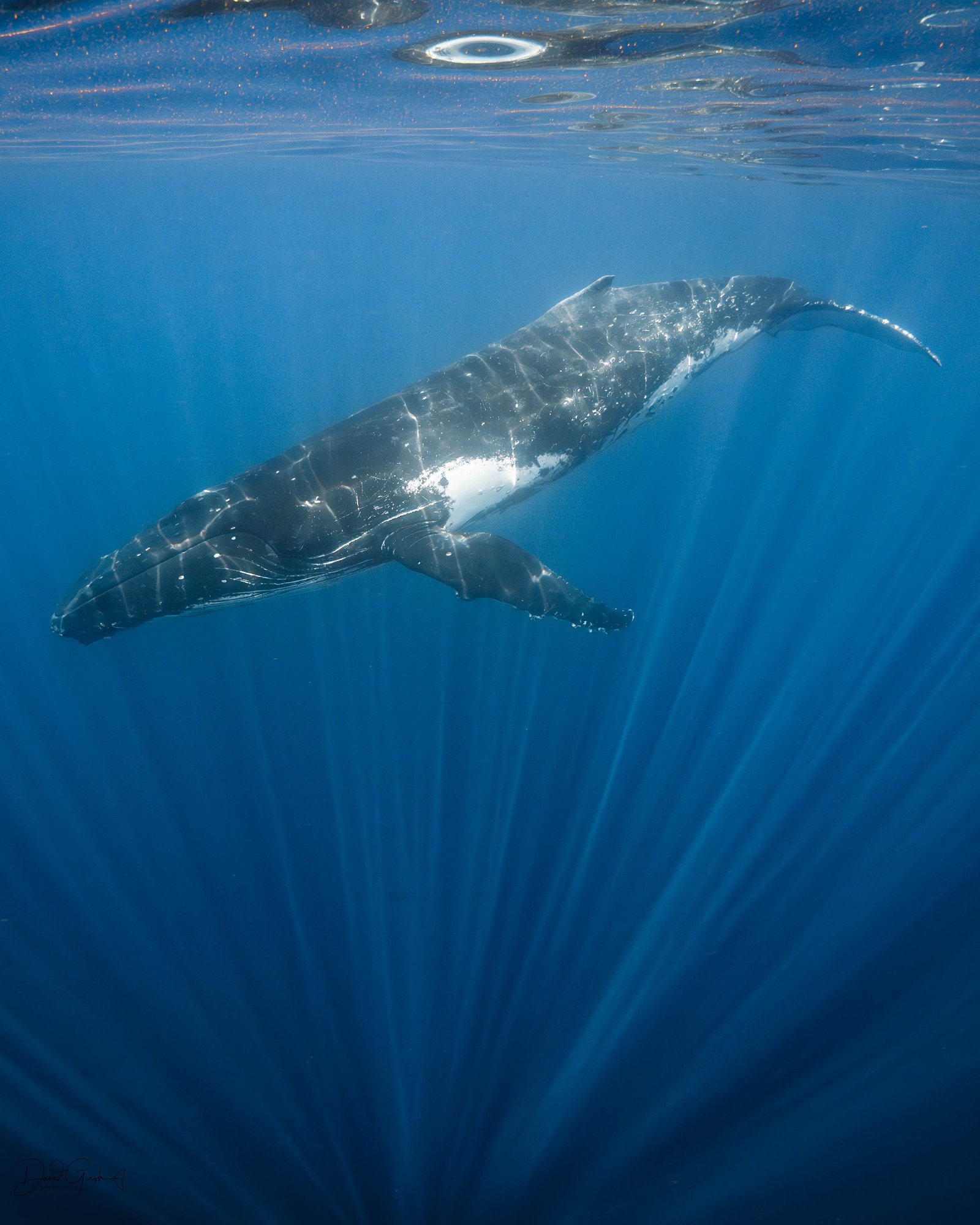
The encounters I remember most are the mother-calf pairs. The calves are enormous by any standard, four to five metres at birth, but next to their mothers they look small, and young, and vulnerable in a way that cuts through whatever professional composure you're trying to maintain.
She held herself perfectly still in the water column, watching me. Her calf tucked in below her, one pectoral fin touching her belly. Twenty tonnes of mother. I did not move. Neither did she. We stayed like that for what felt like a very long time. That's the encounter I came back to on the days when the water was rough and the whales were elusive and nothing was going right. The reminder of why the season was worth it.
Every fluke photograph from that season went into the Happywhale database, matched against a global catalogue, adding to the picture of where these animals go, how long they live, how often they breed. The Oceania humpback subpopulation is still recovering from commercial whaling, still listed as endangered. Every data point matters. Every calf born in Vava'u matters.
I was fourteen when I put Tonga on the map. I was in my forties when I finally got there. The dream held up. The whales were everything I'd imagined, and then considerably more. Some things are worth waiting for.