There's a concept in Fiji called qoliqoli, traditional fishing grounds held by customary right by coastal communities. Long before any government designated a marine protected area, Fijian villages were managing their reef systems through seasonal closures, species restrictions, and community protocols that balanced harvest with regeneration. What I found when I came to document that work was a reef system under pressure from multiple directions at once, and communities fighting back on all fronts.
The reefs here are genuinely extraordinary. Shallow coral gardens stretching to the horizon, plate corals the size of dining tables, fish life so dense it's disorienting. Divers move through it in slow motion, cataloguing, photographing, trying to hold the whole picture in their heads. But the picture has been changing, and not slowly.
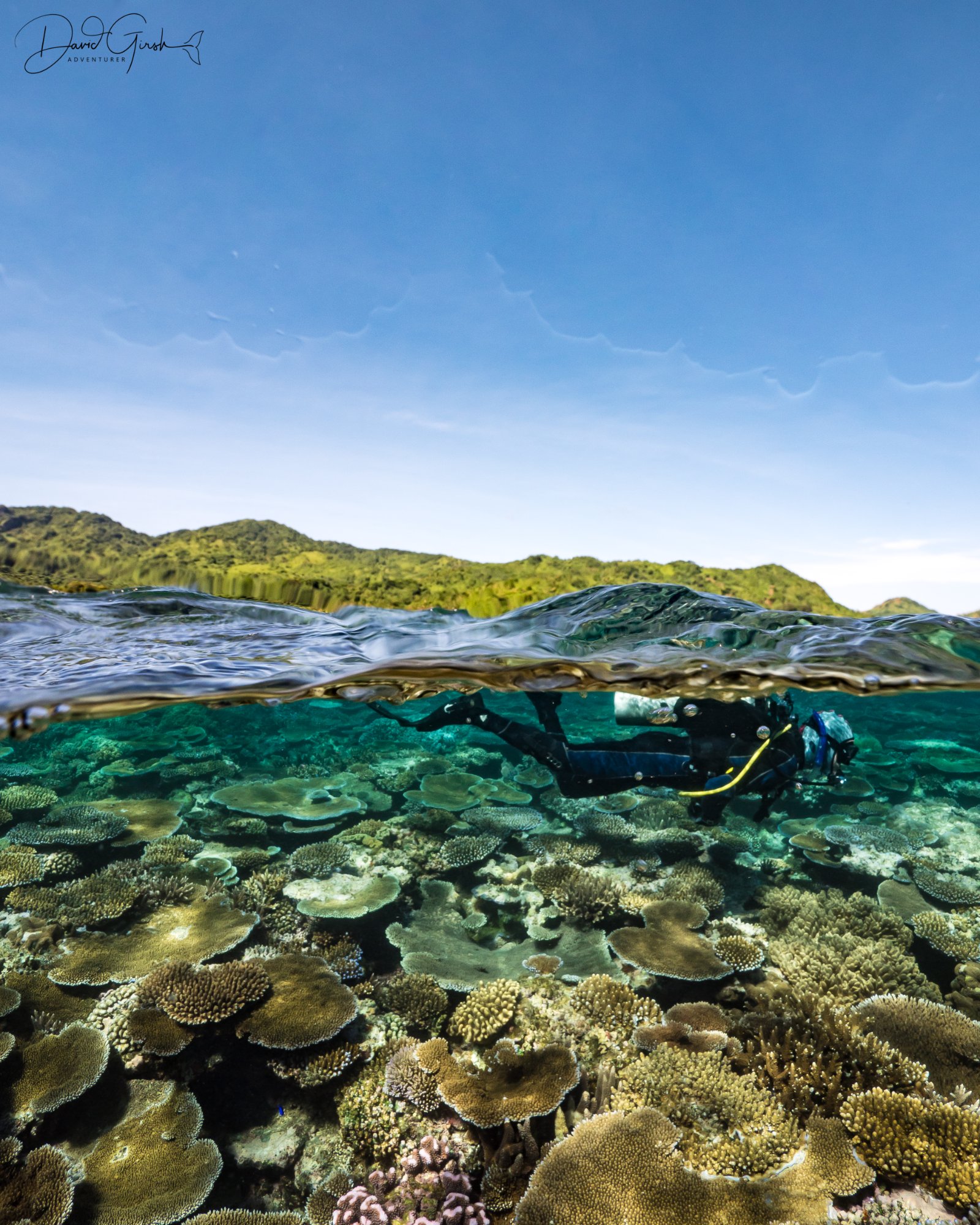
Crown of Thorns starfish, COTs, are one of the most destructive forces on a coral reef. A single adult can consume up to ten square metres of live coral per year. When populations explode, which they do periodically and with increasing frequency linked to nutrient runoff from land, they can strip a reef section bare in weeks. What's left behind is white skeleton, the architectural structure of the reef intact, but the living tissue gone. Recovery, if it happens at all, takes years.
I filmed COT outbreaks on this trip, the slow, methodical devastation of it, the eerie contrast between a healthy coral head and the bleached ghost of one that a starfish has already passed over. It doesn't look like a disaster from the surface. You have to get in the water to understand what's being lost.
THE MANGROVE CONNECTION
COT outbreaks don't happen in isolation. One of the key drivers is nutrient pollution, agricultural runoff, coastal development, deforestation, that fertilises algae blooms and creates the conditions for COT larvae to survive in much higher numbers than normal. Which brings you, almost inevitably, to the mangroves.
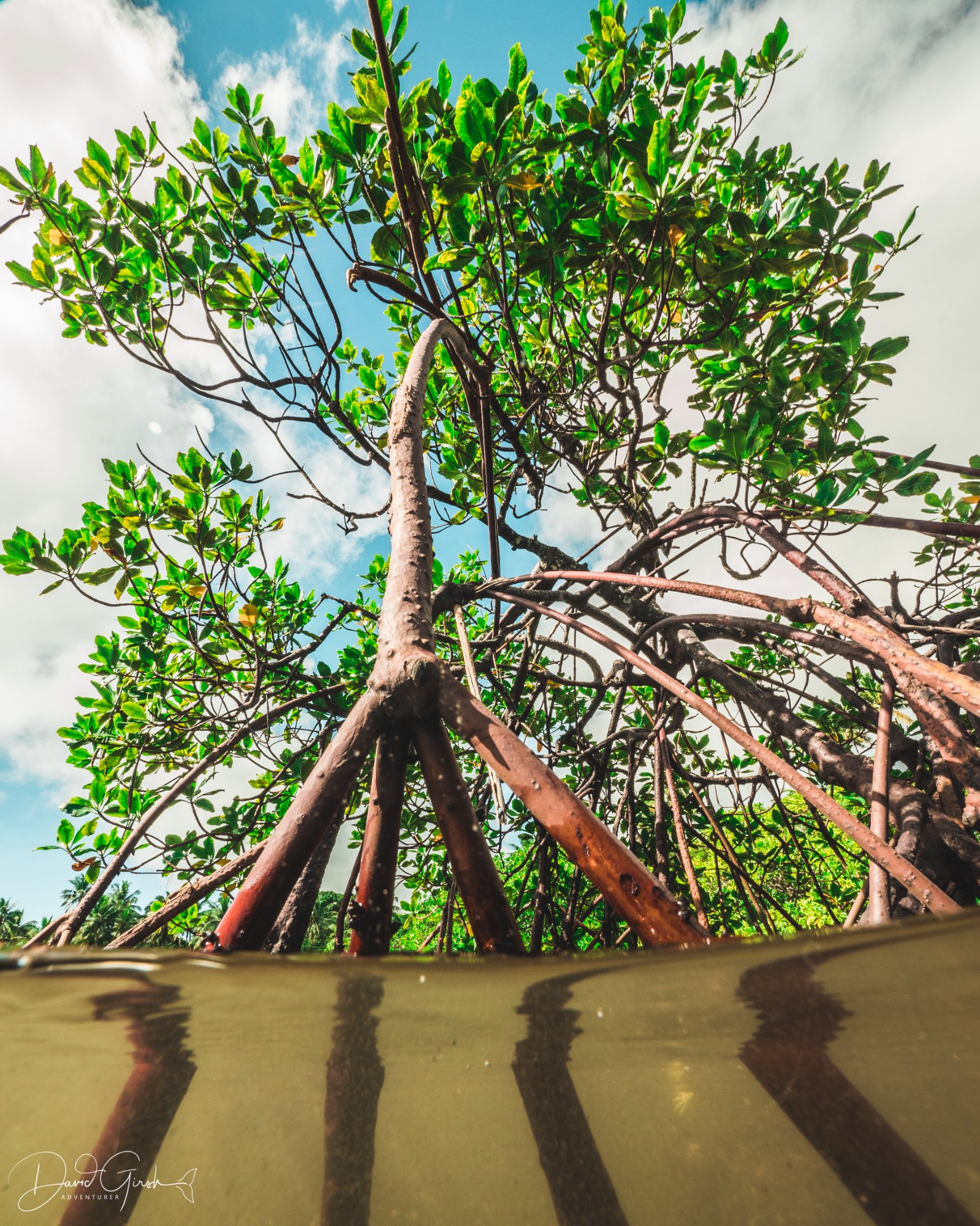
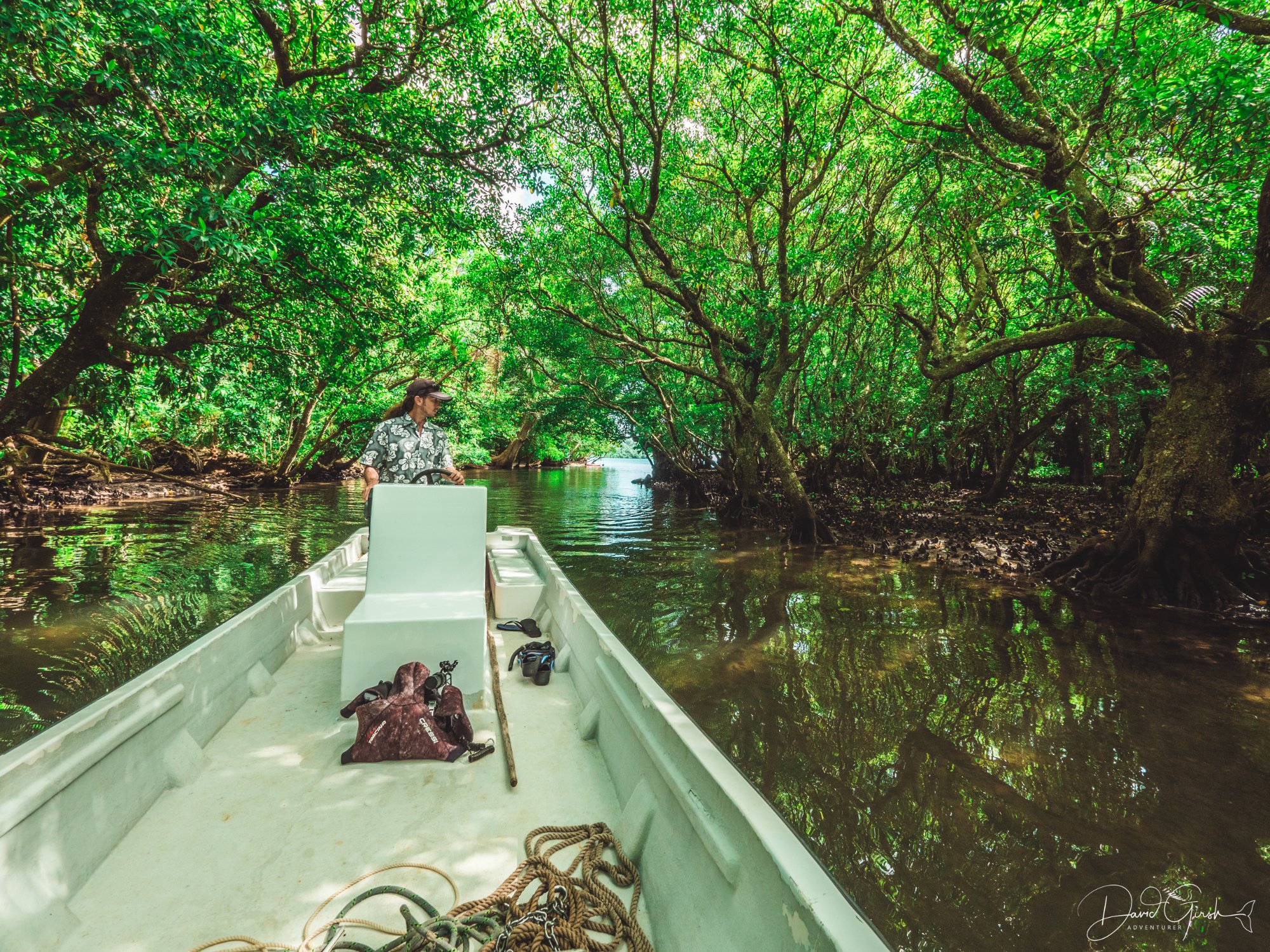
Fiji's mangrove forests are among the most extensive remaining in the Pacific. They line the estuaries and sheltered coastlines, providing nursery habitat for reef fish, carbon storage, and the raw material for traditional construction and fishing. But their most critical function, the one that connects most directly to reef health, is filtration. Mangroves trap sediment and absorb nutrients before they reach the reef. Remove the mangroves, and everything that runs off the land goes straight into the water column.
Coastal erosion is accelerating that process. Where mangroves have been cleared for development or aquaculture ponds, the shoreline destabilises. Soil that was held in place by root systems begins moving, into rivers, into the sea, onto reefs. Sediment smothers coral. It blocks the light corals need to photosynthesise. It creates the nutrient conditions that drive COT outbreaks. The chain of cause and effect runs directly from a cleared hillside to a dead coral head.
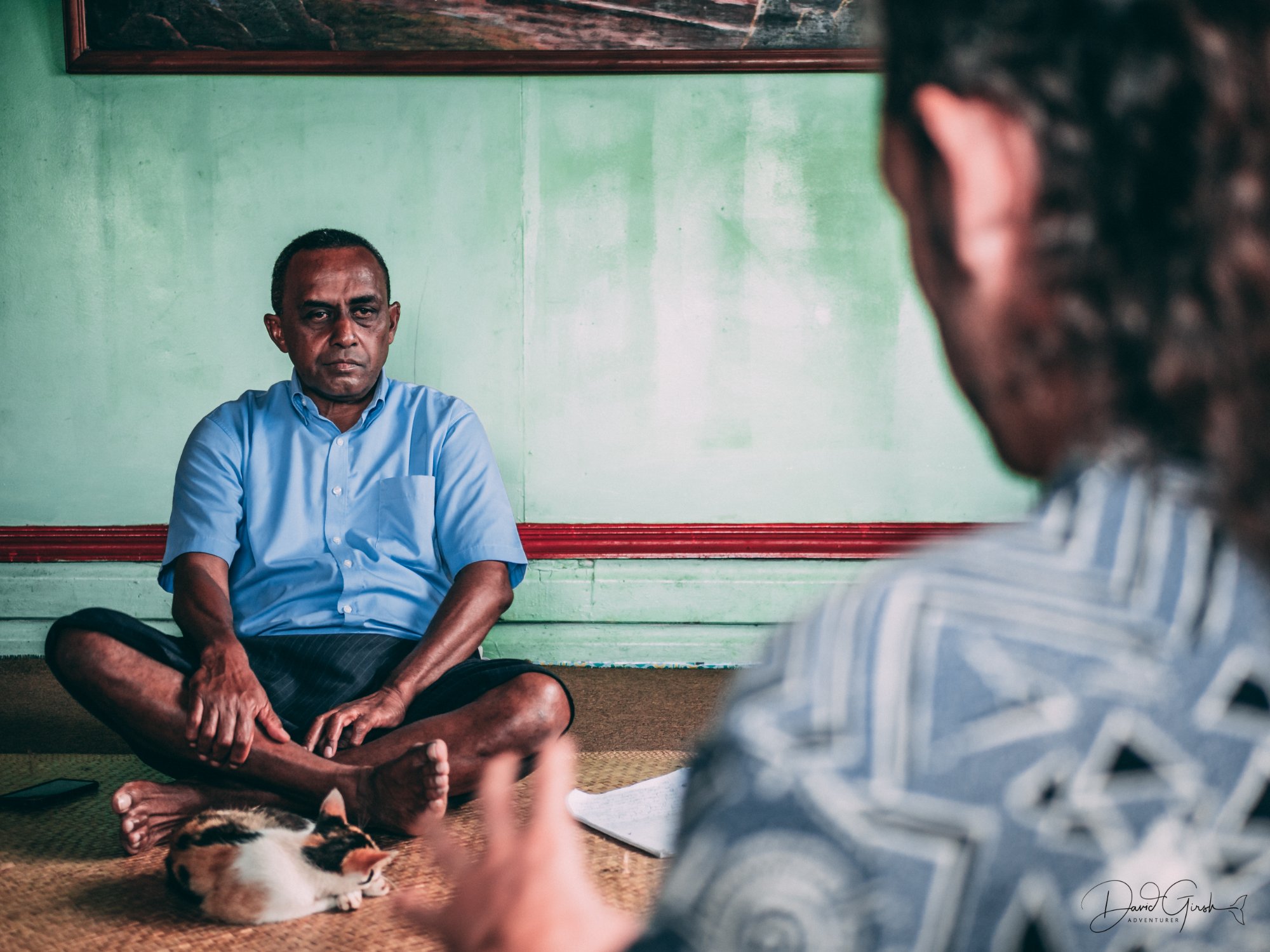
"The reef and the forest are the same system. What happens on the land happens on the reef. We've always known this. The problem is getting everyone else to act like they know it too."
THE CULTURAL DIMENSION
What struck me most in Fiji wasn't any single threat, it was the way communities understand the connections between them. The seasonal closures, the rules about what you take and what you leave, the protection of mangrove stands as much as reef systems, it's all part of the same integrated picture. The reef isn't a resource to be managed in isolation. It's part of a living system that runs from the ridge to the reef, and the people who have managed it for centuries understood that long before any scientist drew the diagram.
The international conservation apparatus is slowly catching up. Integrated ridge-to-reef programs, mangrove carbon credits, COT control programs supported by community divers, the tools are becoming available. The question is whether the communities who have always been the real guardians of these systems get the resources, the authority, and the recognition to lead that work, or whether they continue to watch decisions about their reefs get made somewhere else, by people who've never been in the water.