From the time I was very young, I was snorkelling and freediving in the Red Sea. That's where it started, face down in the water, breath held, watching what was underneath. That early immersion is what made me passionate about the ocean and about diving. Years later I discovered scuba, and it opened up new depths. But as I started diving specifically to make photos and films, I noticed something. The two approaches produce completely different encounters. That difference became something I couldn't ignore.
Scuba gives you time. Freediving gives you silence. When you're shooting, really shooting, trying to get close to wild animals behaving naturally, silence turns out to matter more than time.
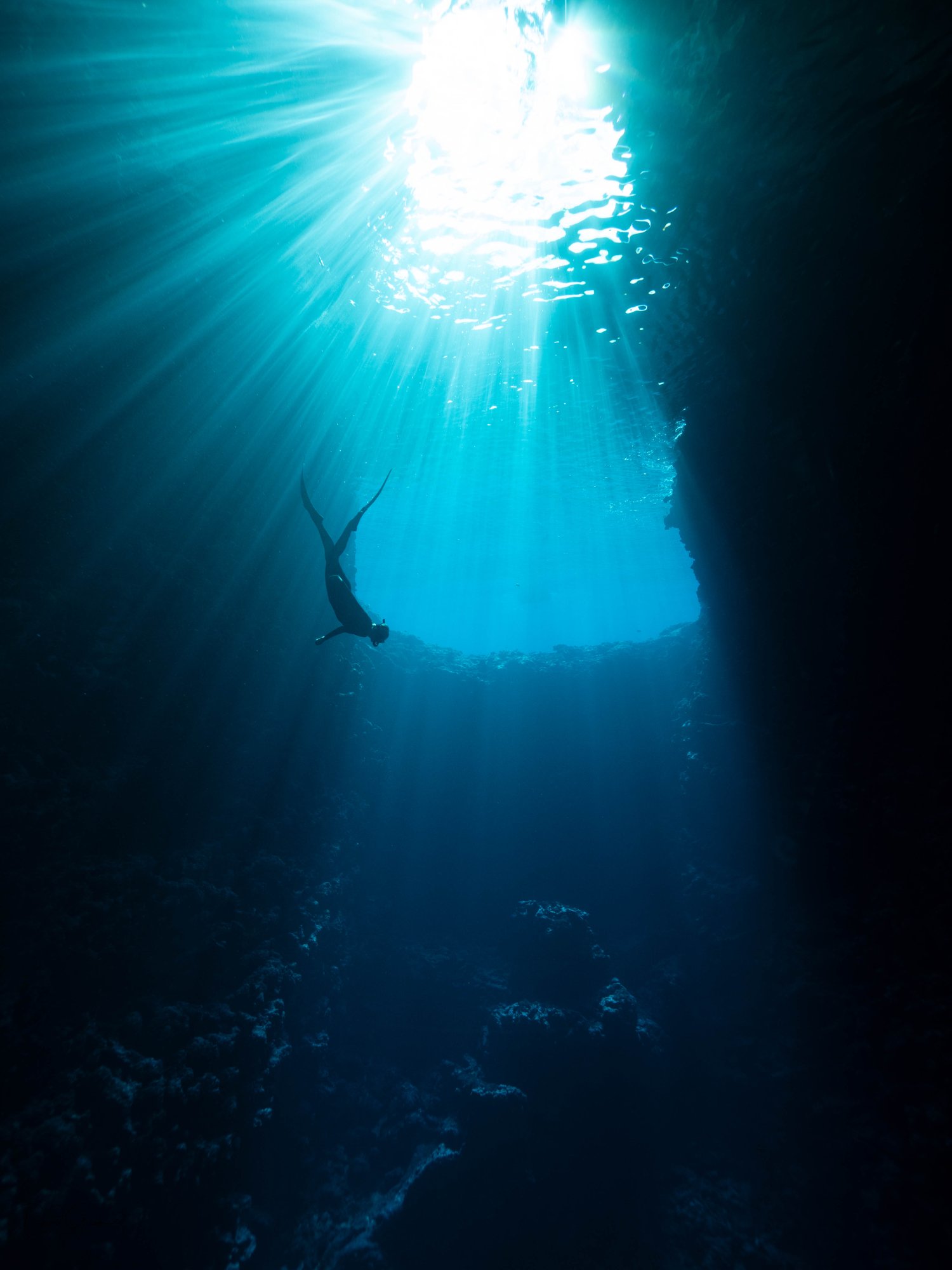
Wildlife behaviour changes around bubbles. Anyone who has spent significant time underwater has noticed it: the fish that hold their ground until a diver exhales, then bolt at the sound. The dolphins that approach a freediver with curiosity but circle wide of a scuba diver. The manta rays that seem unbothered until the tank-breather gets close, then bank away. Bubbles are foreign to the ocean. Everything that lives there has learned, over evolutionary time, what they mean.
On a breath-hold, you remove that signal. You're still wrong, still too large, still moving oddly, still carrying a foreign object, but you're quieter. And in many situations, that quiet matters enormously.
THE PHYSICS OF A BREATH
Here's what you're working with. A competent freediver on a relaxed breath-hold has somewhere between 90 seconds and three minutes at depth before the urge to breathe becomes overwhelming. At the surface, you can extend that. Deeper, the compression of the lungs shortens it. The dive itself, the descent, the time on the bottom, the ascent, typically takes 30 to 90 seconds for a shallow working depth of 5 to 15 metres.
That's not much time. Which means everything has to be right before you go down. Composition considered. Settings dialled. The animal's position and trajectory read. You don't adjust your exposure on the way to the bottom. You don't recompose halfway through a dive. You commit, you descend, you get what you can get, and you surface.
Freediving photography is all decision and no deliberation. Everything deliberate happens before you go under. Once you're there, you're operating on instinct and the choices you made on the surface.
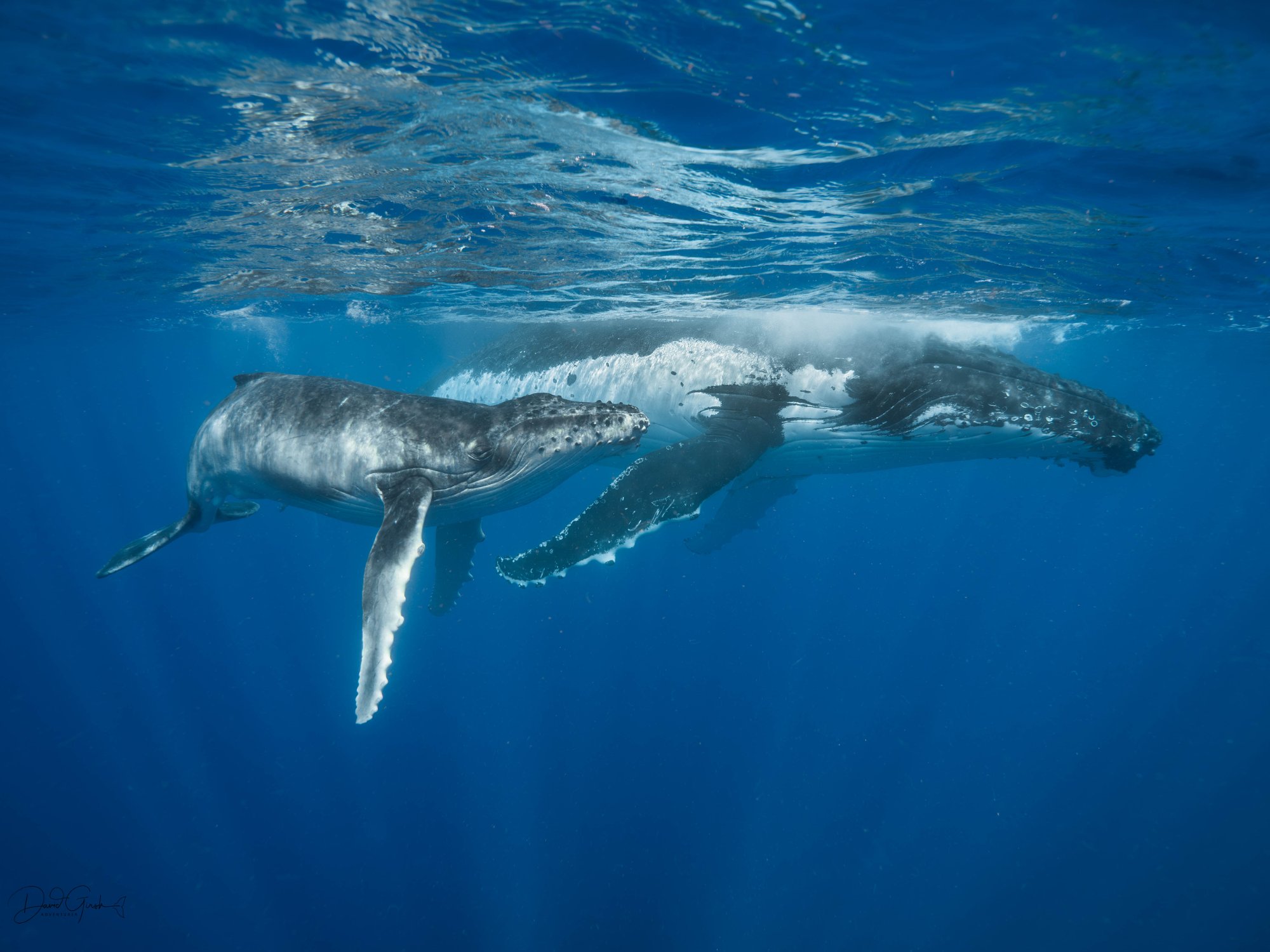
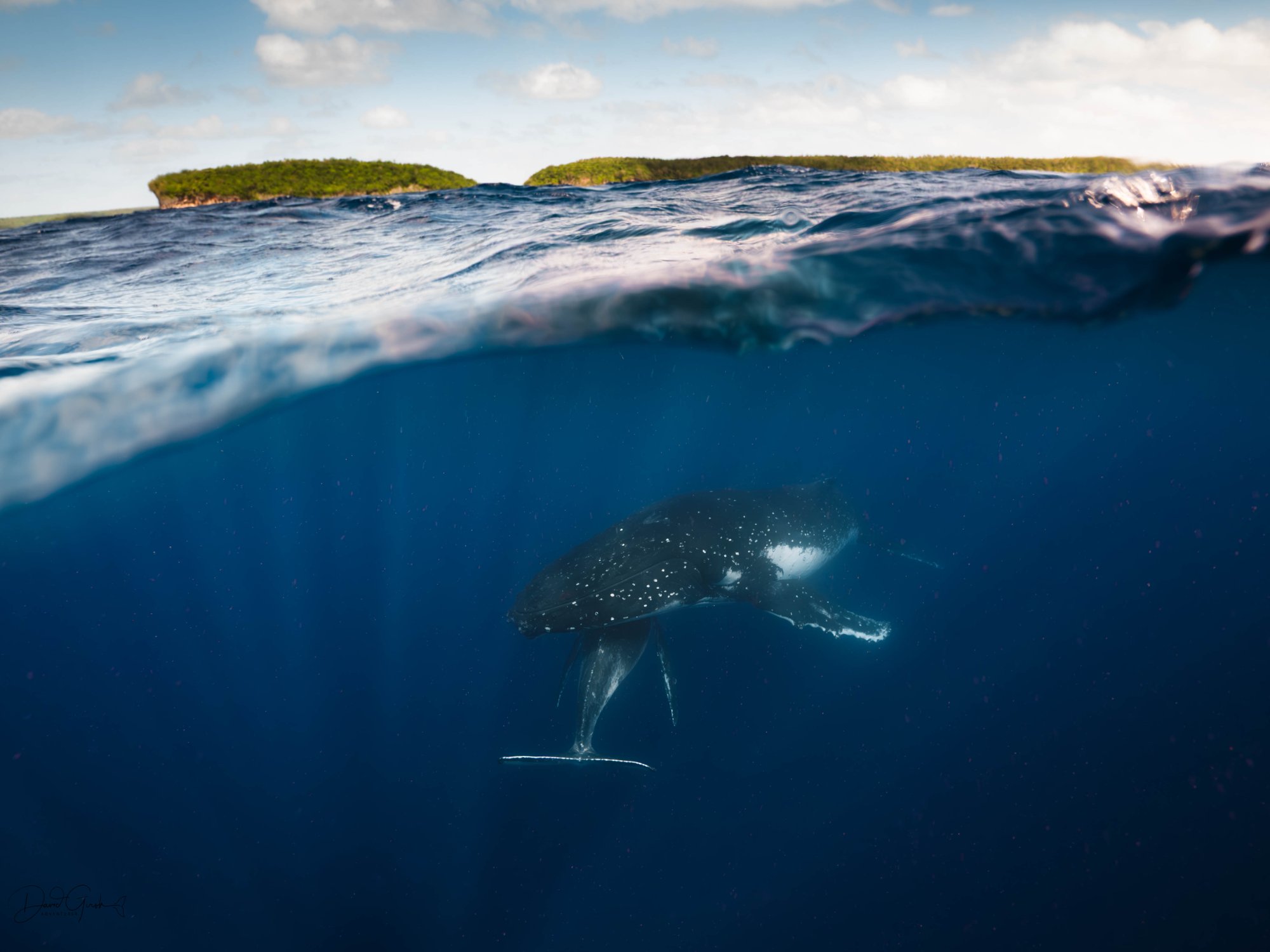
The physical preparation matters as much as the technical. You're not just controlling the camera, you're controlling your body, your buoyancy, your horizontal trim, your fin kicks, your heart rate. Freediving photography is a full-body discipline. People who are excellent scuba photographers sometimes find it frustrating at first because the skill sets are so different. The camera technique is the easy part.
WHAT THE ANIMALS ALLOW
The encounters that are genuinely possible on breath-hold are different from what you get with a tank. Not uniformly better, there are situations where scuba access, the ability to wait indefinitely, produces things a freediver can't match. But the category of encounters where an animal moves toward you, rather than away, becomes significantly larger when you're quiet.
The whale shark sequences I've shot at Ningaloo happened because I could stay ahead of the animal without creating the bow-wave of bubbles that drives them off course. The humpback whale encounters in Tonga happened because the whales were curious about something that wasn't making noise. The leopard sharks let me get close because I wasn't churning up the sand with exhalations. These aren't coincidences.
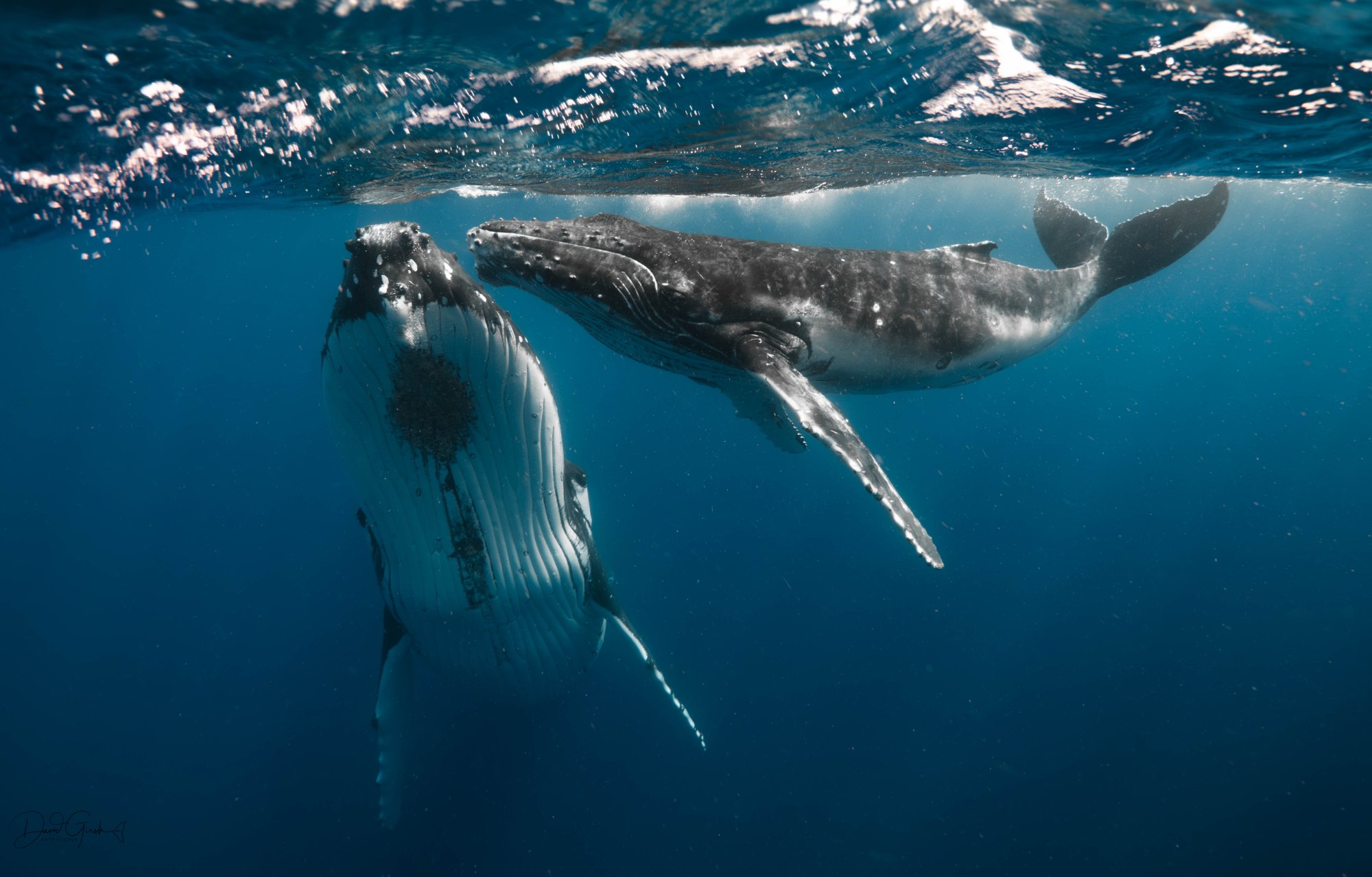
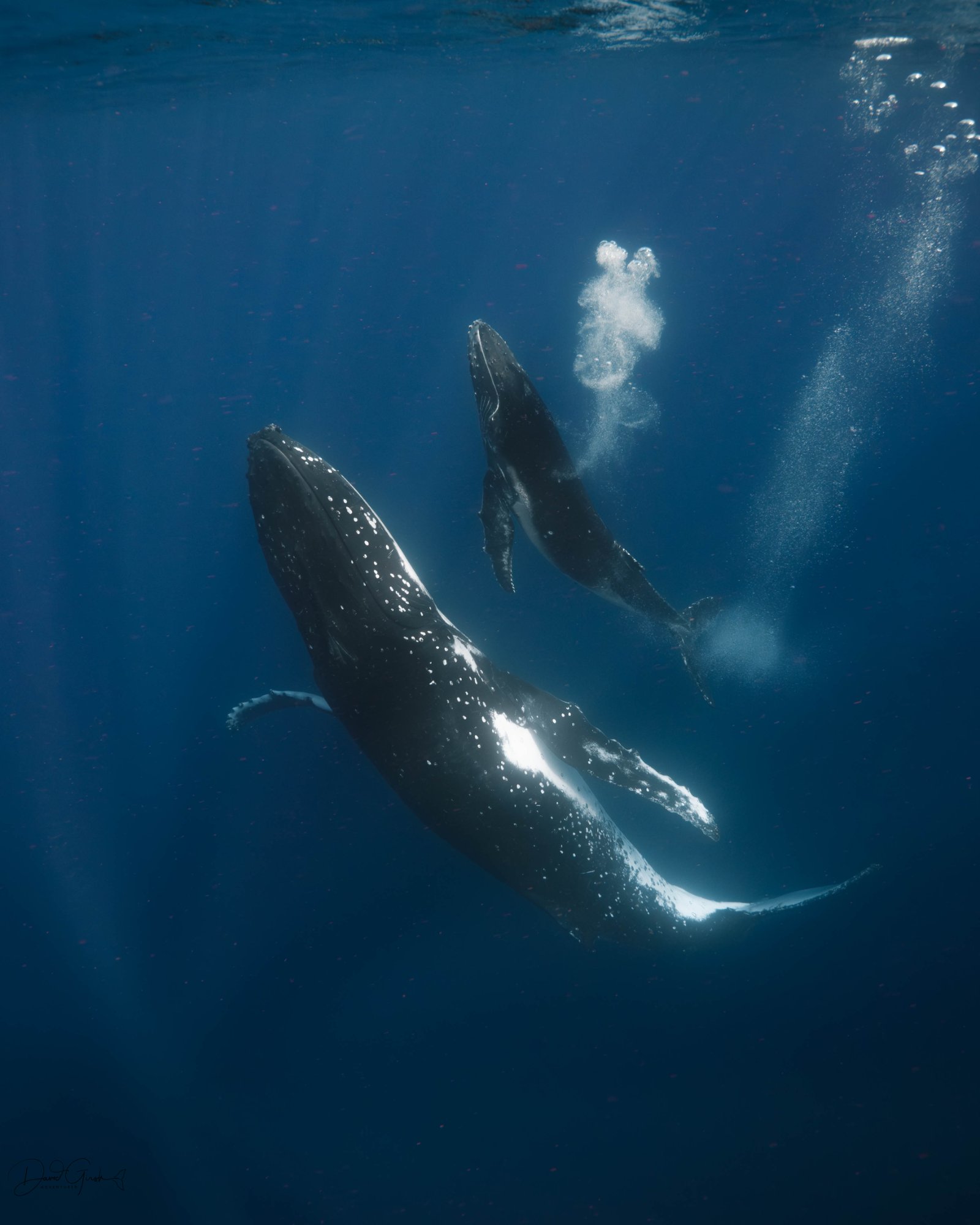
There's also a psychological dimension. The time constraint focuses attention in a way that extended observation doesn't. You have one dive, maybe two good dives, to get what you came for. That focus changes how you see. You notice what the animal is doing more precisely because you have to. You read its body language faster because you can't afford to wait for a second read.
THE COST OF SILENCE
It's not without cost. The failure rate is higher. The physical demands are real, a long day of freediving photography is genuinely exhausting in a way that a scuba dive is not. The safety requirements are non-negotiable: you always dive with a buddy, always have a surface interval, never push to the edge of your capability when you're alone in the water with a camera eating your attention.
There are images I haven't been able to get on breath-hold that a scuba photographer would get routinely, long sequences of slow behaviour, dawn and dusk work in low viz, deep reef documentation. I accept those limits. What I get in exchange feels worth it: the silence, the access, the quality of encounter with animals that have decided they're comfortable with me.
Most of my best work happens on a single breath. What I mean by that isn't that the single breath is the constraint, it's that the single breath is the point. Everything about freediving photography comes down to what you can do in the time you have, with the preparation you've done, in the silence you've earned by leaving the machine behind.
Sixty seconds. Clear water. Something alive in front of the lens. That's enough.