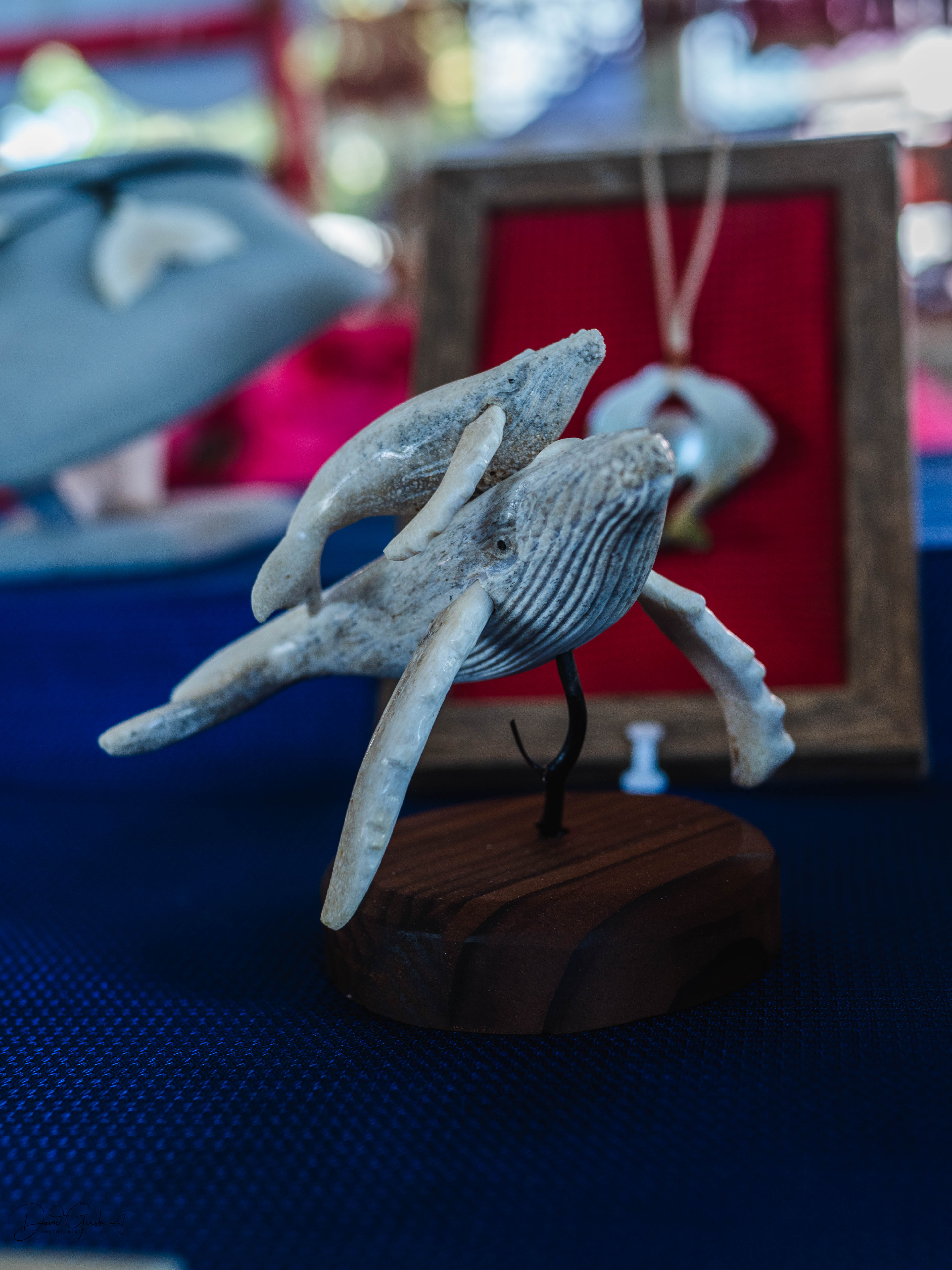
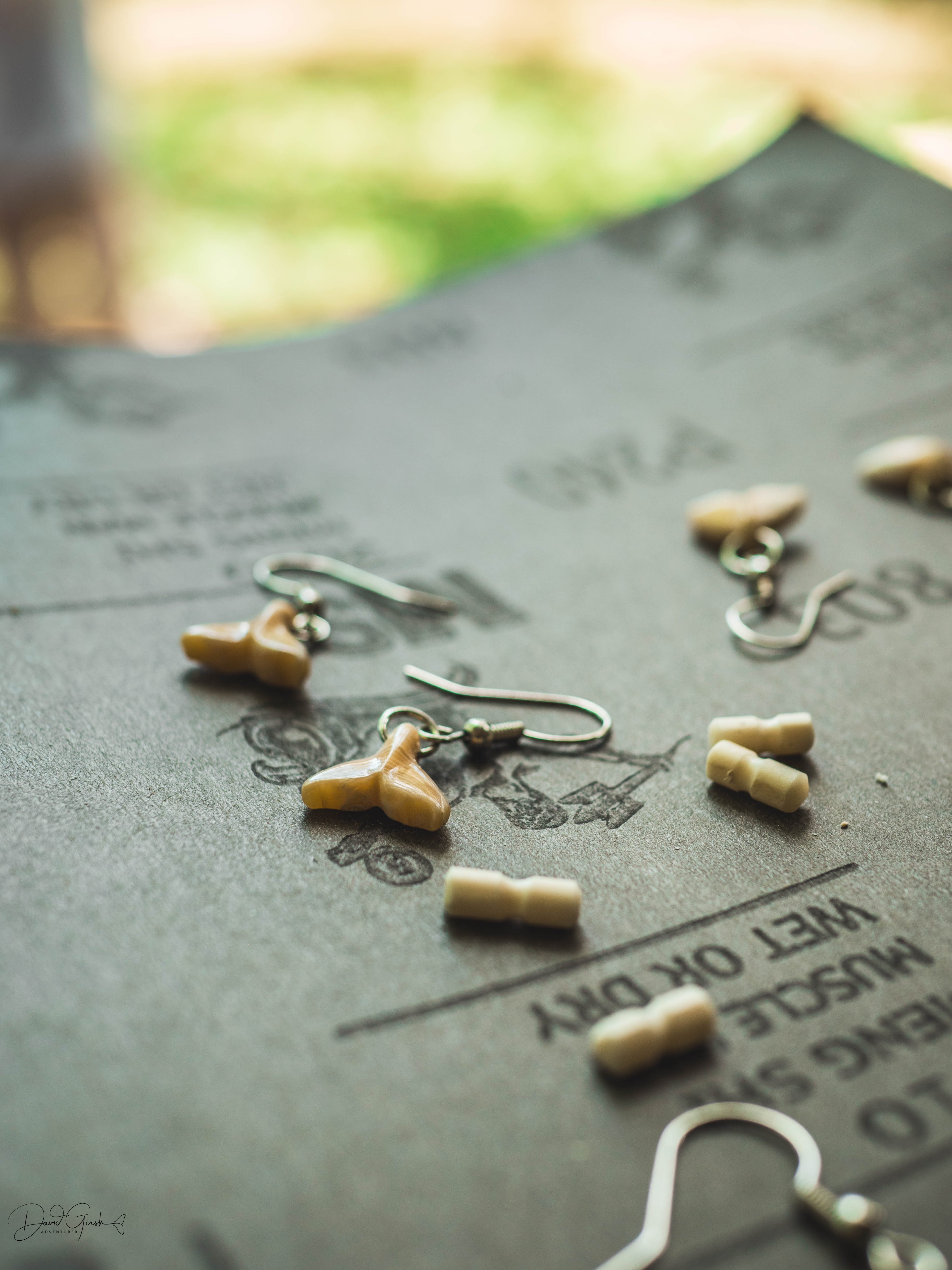
The workspace is simple. A covered shelter, open on all sides. Power tools on one bench, hand tools on another. Bone dust on everything.
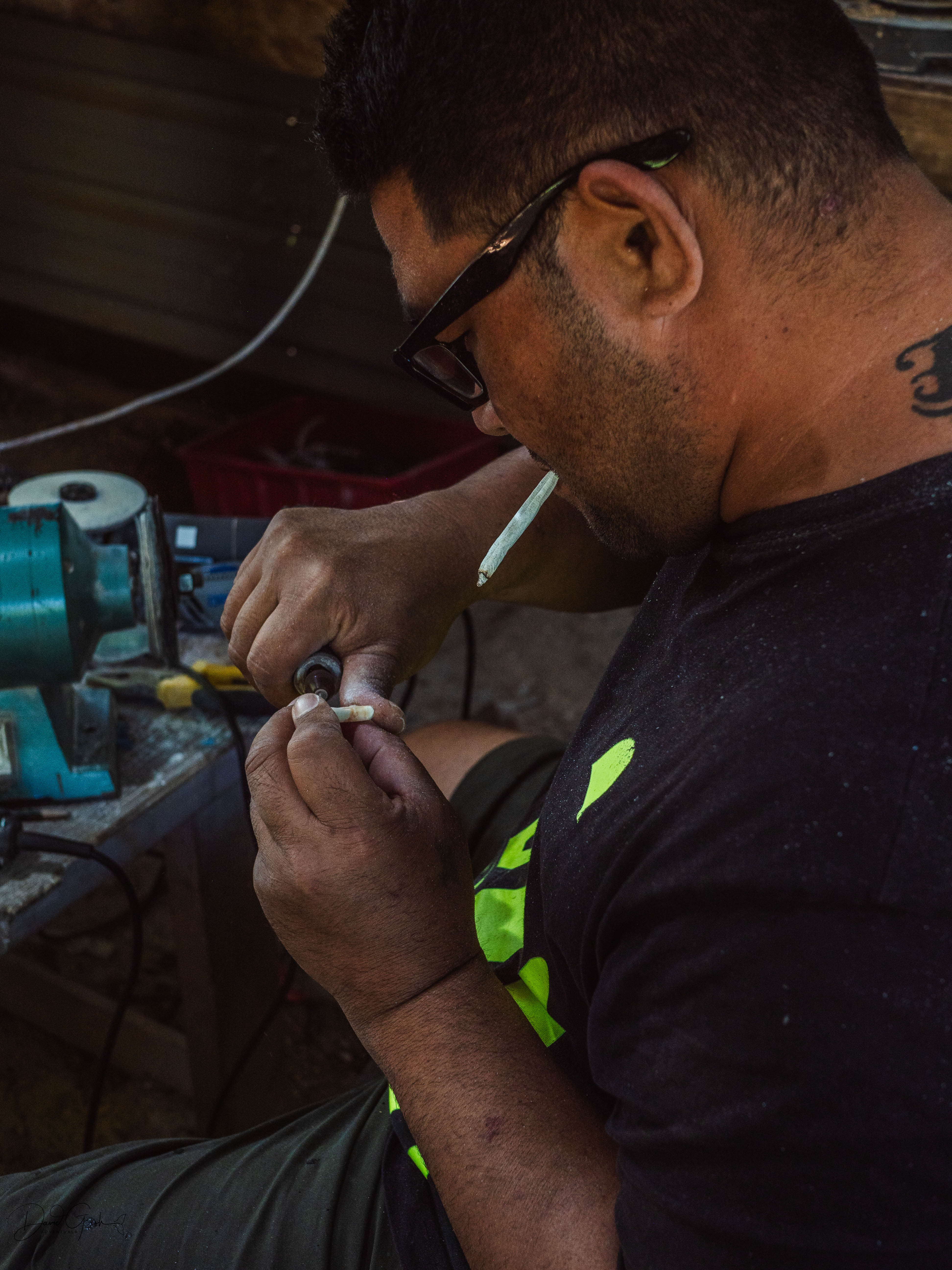
Sione Motuliki sits cross-legged, turning a small piece of whale bone between his fingers. He's working something into it. Not rushing. Just feeling his way through it the way he's done since he was a kid, the way his father did, and his grandfather before that.
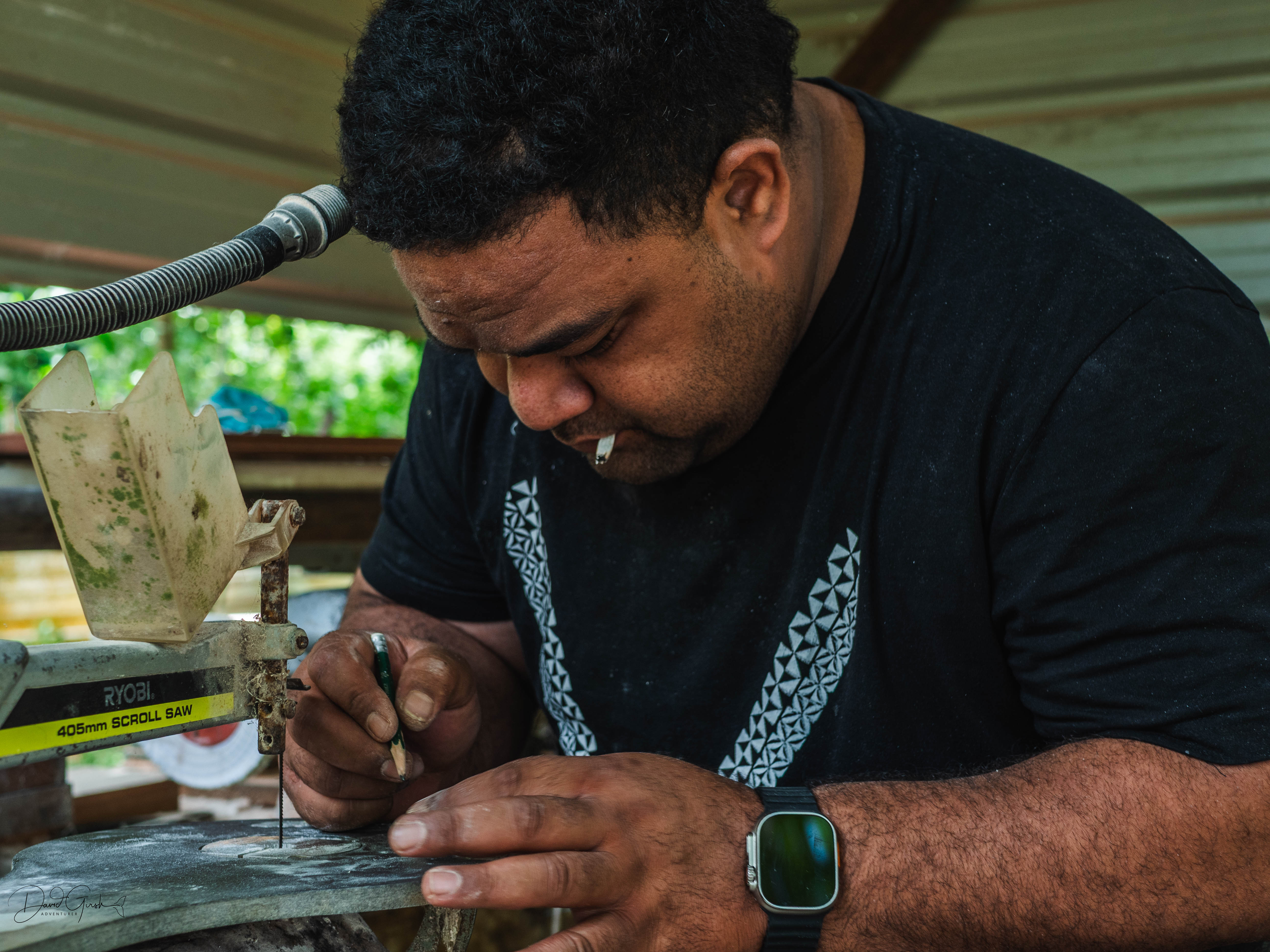
He's a third-generation carver from Vava'u, Tonga. He and his two brothers work whale bone, whale tooth, and wood into things that stop you mid-step at the local market. Whale sculptures so detailed you can count the grooves in the belly. Whale tail earrings small enough to sit on your fingertip. War clubs wrapped in red cord with carved bone handles. Pieces that feel like they belong in a gallery but end up on a blue tablecloth under a tin roof, waiting for someone to pick them up and turn them over in their hands.
Their grandfather started the tradition. Turtle shells, sea shells, basic tools. Their father pushed further. Picked up professional equipment, started working with wood and bone. By the time it reached the three brothers, the craft had evolved but the principle hadn't changed. Every design is original. They don't copy other carvers. Never have.
"This type of art is in our blood. What we do, we feel that inside us."
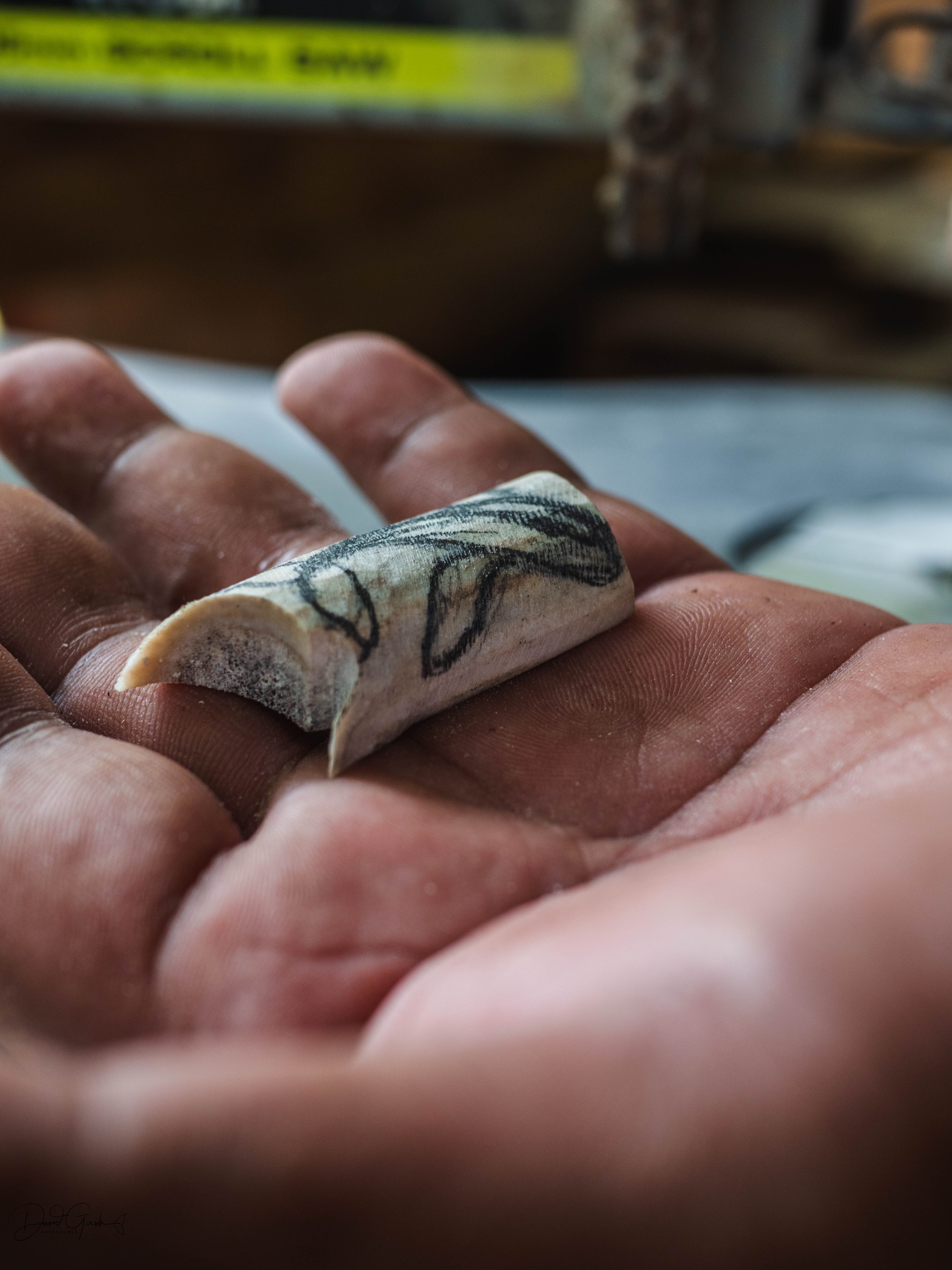
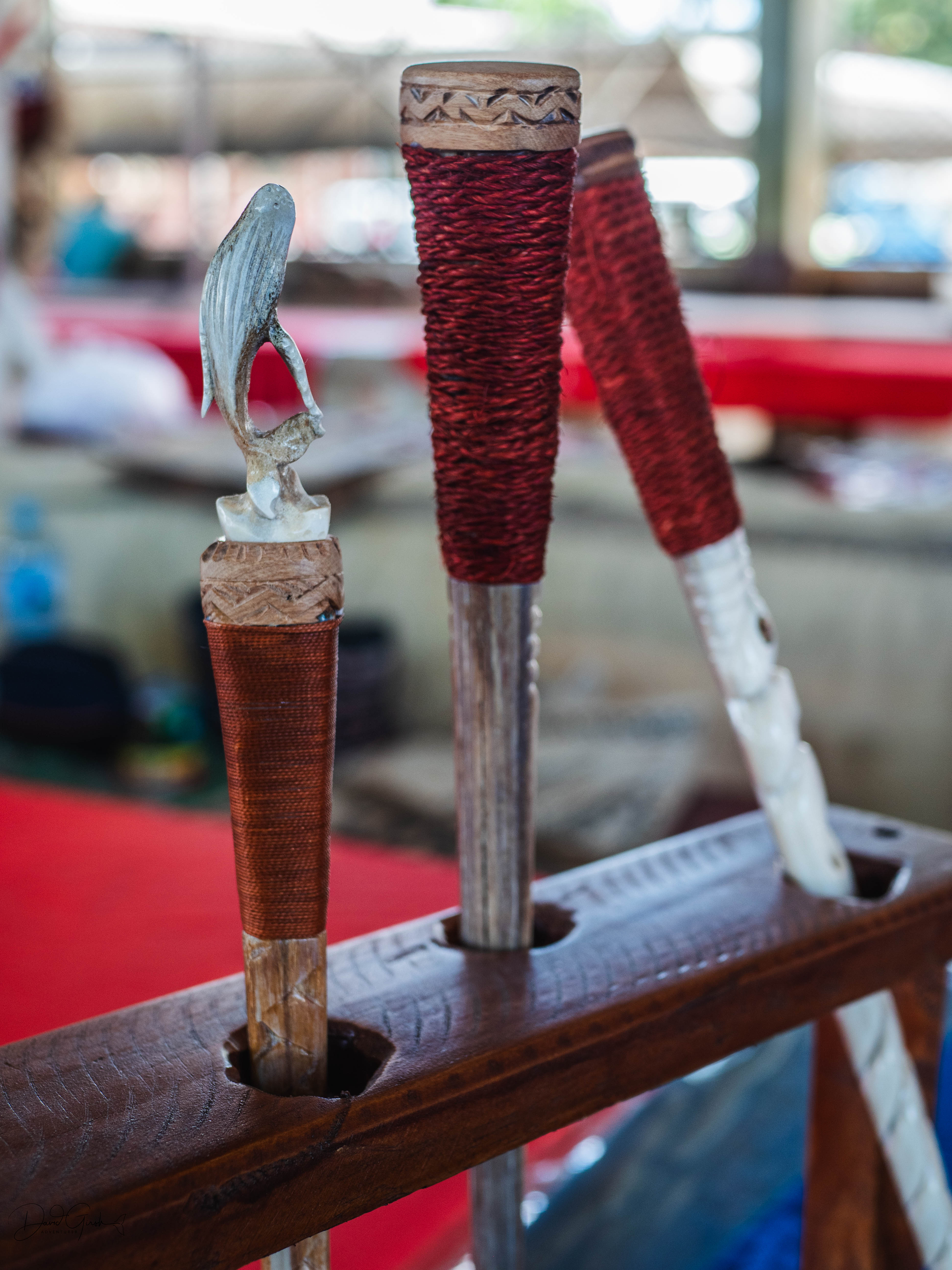
There's no school for this. No course. No YouTube tutorial that teaches you how to read a piece of whale bone and know what's inside it. It passes from hands to hands, father to son, and you either feel it or you don't.
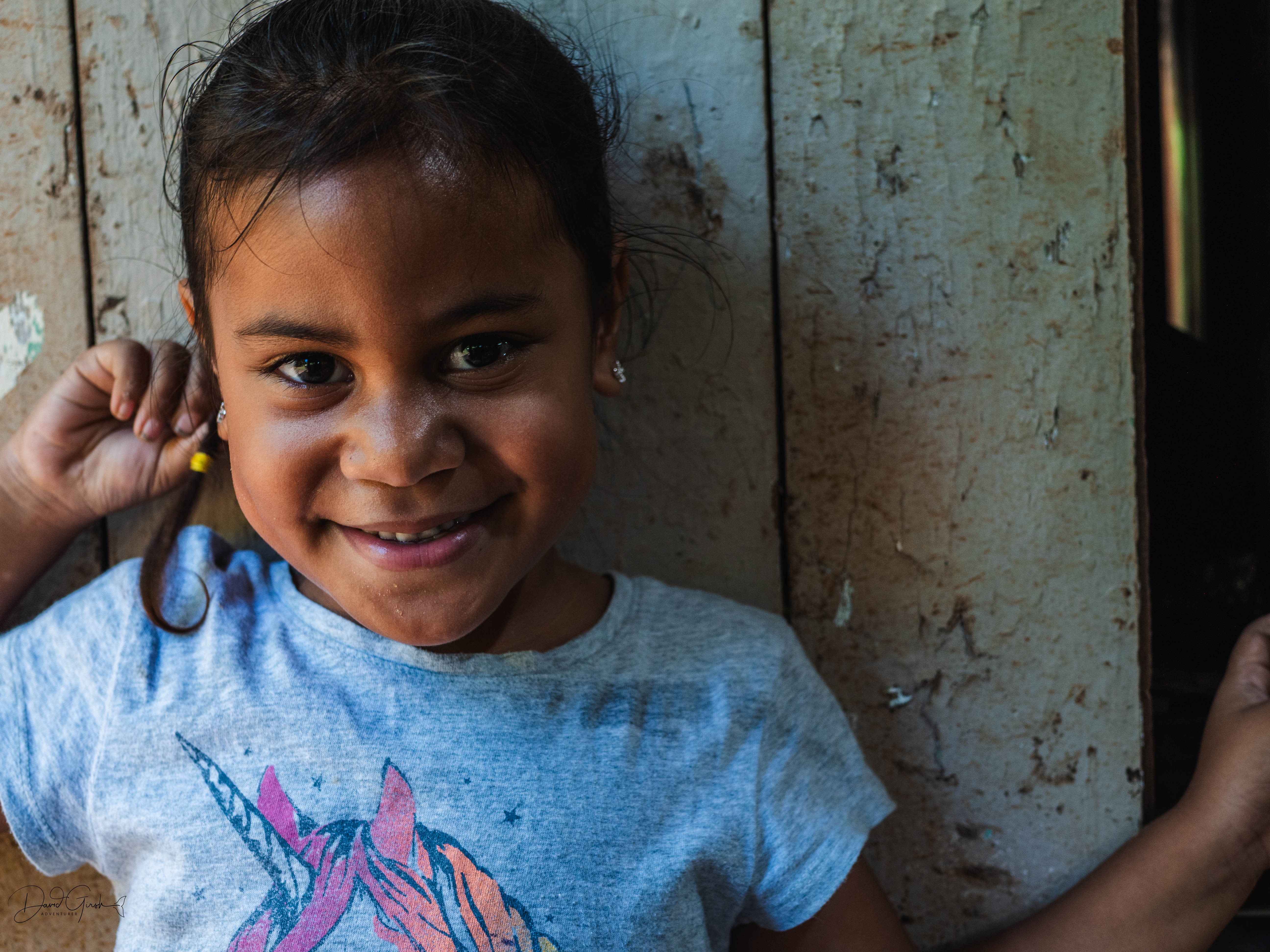
I visited their workshop on a day off between whale swims in Vava'u. Spent a few hours just watching. One brother at the scroll saw, cutting precise lines through bone. Sione working a smaller piece by hand, head down, completely locked in. Kids running around. Music from a phone somewhere. The kind of afternoon that doesn't feel like work but clearly is.